Still KISSING MY KUMPELS* GOODNIGHT
Mailin Alders
Carrier Bag of Coal: Erinnerungen tragen (Carrying memories / Nosząc wspomnienia)
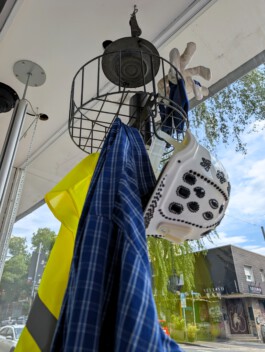
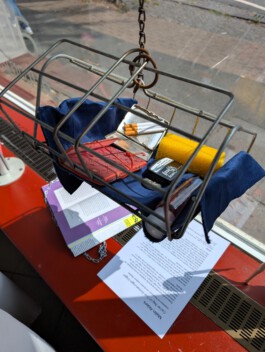
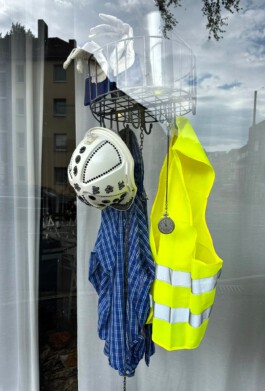
Installation mit Kauenkorb und diversen weiteren Objekten / Installation with metall mining basket (Kauenkorb) and various other objects / Instalacja z koszykami i różnymi innymi obiektami
Fotos: Magdalena Götz
(DE) Diese künstlerisch-dokumentarische Installation ist eine Zeitkapsel, die postindustrielle Erinnerungen bewahrt. In ihr wird ein historischer Kauenkorb, in dem Alltag- und Arbeitskleidung der Kumpel unter der Decke von Waschkauen aufbewahrt wurden, zum Träger von Geschichten und Erfahrungen. Von Schutzausrüstung zu persönlichen Erinnerungsstücken verweisen die Gegenstände auf das Leben im Bergbau.
Die Arbeit ist inspiriert vom Social-Media-Format What’s in my bag? und verweist, indem hier die Taschen der Bergleute geöffnet werden, auf einen im Ruhrgebiet mittlerweile historischen Kontext, Der Bergbau wird nicht nur als Monument der Industrie dargestellt, sondern vor allem als ein Teil gemeinsamer Geschichte, die in den Objekten und somit in Erinnerungen weiterlebt.
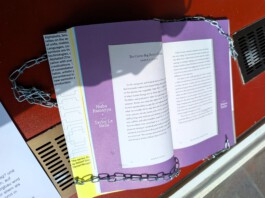
Zusätzlich bezieht sich die Installation auf Ursula K. Le Guins Essay The Carrier Bag Theory of Fiction (1986), in dem sie eine feministische Technologiegeschichte entwirft und die Tragetasche (der Fiktion) als Behälter für kollektiv gesammelte Erzählungen versteht. Auch in der Zeitkapsel befinden sich keine großen Held*innengeschichten, sondern Spuren des Alltags, die das Leben unter Tage prägten. Die Zeitkapsel wird so zu einem Ort der Erinnerung, welcher nicht nur für eine vergangene Zeit steht, sondern auch für die vielen Geschichten, die in den kleinen Dingen des Lebens verborgen sind. So reicht die Carrier Bag of Coal in vernetzte Zukünfte.
(EN) Carrier Bag of Coal: Carrying memories
This artistic-documentary installation is a time capsule that preserves post-industrial memories. In it, a historic metall basket called Kauenkorb, in which miners’ everyday and work clothes were stored under the ceiling of mining washrooms, becomes a repository of stories and experiences. From protective equipment to personal mementos, the objects refer to life in mining.
The work is inspired by the social media format What’s in my bag? and, by opening the miners’ bags, refers to a context that has become historical in the Ruhr region. Mining is not only presented as a monument to industry, but above all as a part of shared history that lives on in the objects and thus in memories.
In addition, the installation refers to Ursula K. Le Guin’s essay The Carrier Bag Theory of Fiction (1986), in which she outlines a feminist history of technology and understands the carrier bag (of fiction) as a container for collectively gathered narratives. The time capsule also contains no great heroic tales, but rather traces of everyday life that shaped life underground. The time capsule, thus, becomes a place of remembrance, representing not only a bygone era, but also the many stories hidden in the little things in life. Therefore, the Carrier Bag of Coal extends into networked futures.
(PL) Carrier Bag of Coal: Nosząc wspomnienia
Ta artystyczno-dokumentacyjna instalacja to kapsuła czasu, która przechowuje postindustrialne wspomnienia. Historyczny łańcuszek z koszykiem, na którym zawieszano odzież codzienną i roboczą pod sufitem cechowni, staje się nośnikiem historii i doświadczeń. Od wyposażenia ochronnego po osobiste wspomnienia, obiekty odnoszą się do życia w górnictwie.
Praca ta jest inspirowana popularnym w mediach społecznościowym formatem What’s in my bag? i poprzez otwieranie toreb osób górniczych odnosi się także do obecnie już historycznego elementu Zagłębia Ruhry. Górnictwo przedstawiane jest nie tylko jako pomnik przemysłu, ale przede wszystkim jako część wspólnej historii, która nadal żyje w przedmiotach, a tym samym we wspomnieniach.
Ponadto instalacja odnosi się do eseju The Carrier Bag Theory of Fiction Ursuli K. Le Guins (1986), w którym to projektuje ona feministyczną historię technologii i przedstawia torbę (fikcji) jako kolektywnie zbierane opowieści. W kapsule czasu również nie znajdziemy bohaterskich historie. Są tam ślady codzienności, które kształtowały życie pod ziemią. Kapsuła czasu staje się w ten sposób miejscem upamiętnienia, które nie odnosi się jedynie do przeszłego czasu, ale i do wielu historii, które skrywają się w małych codziennych rzeczach. Tak oto Carrier Bag of Coal sięga do połączonych przyszłości.
Quellen / Sources / Źródła:
Ursula K. Le Guin (1986): „The Carrier Bag Theory of Fiction.“ In: Women of Vision. St. Martin’s Press, New York.
Wir waren Kumpel, Dokumentarfilm / documentary film / film dokumentalny, Deutschland / Germany / Niemcy 2023, Regie / director / reżyseria: Christian Johannes Koch, Jonas Matauschek.
Fotos: Laura Kucklinski
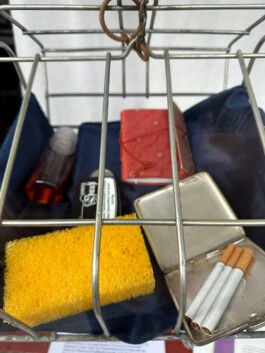
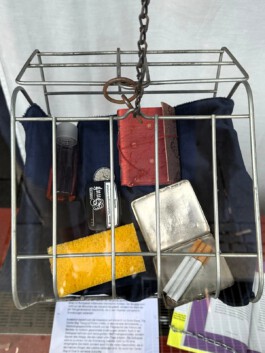
Foto: Luca Watermann